Get hired in the data center industry — wherever you live
Data centers are the engines of the AI boom — and companies are pouring trillions of dollars into building them across America, faster than they can hire. This guide shows you where the jobs are, which credentials open doors, and the free training programs near you that are worth your time.
No four-year degree required · Entry wages $18–$26/hr · Free training in every market

The biggest infrastructure boom in a generation
Artificial intelligence runs on data centers, and the race to build them is reshaping the American economy. The numbers are staggering — and they all point to one thing for workers: demand.
Why a data center job?
The country is in a once-in-a-generation building boom. For workers, that means rare leverage: high pay, no four-year degree, and demand that isn't slowing down.
Real money, no degree
Journeyman electricians on data center jobs earn $60–$90/hr in top markets, and operations techs reach $90k–$115k. The door opens with weeks of training — not four years of tuition.
Demand outpaces supply
Hundreds of data centers are under construction to power the AI boom, and operators can't hire fast enough. That shortage is your leverage at the negotiating table.
A career, not a gig
The internet — and the AI running on it — never shuts off. Data centers run around the clock, the people who keep them running are essential, and there's a clear ladder from apprentice to six figures.
The 5-Minute Answer: Fastest Path to a Data Center Job
Total time: 3–6 months. Out-of-pocket cost: $150–$500. Entry wage: $18–$26/hr in most markets. It's the fastest documented way in — and it puts you on the floor where the higher-paying roles get filled from within.
- Get OSHA 10 General Industry online — Cost: $150–$300. Takes a weekend. Search "OSHA outreach training program" at osha.gov. Choose "General Industry" not "Construction" for operations roles.
- Apply to FM contractors operating near you — BGIS, ABM, JLL, Cushman & Wakefield, and CBRE GWS are the major players. Search LinkedIn for "[FM contractor name] + [your city]." Look for "data center technician," "facilities technician," or "critical environment technician."
- Once hired: get NFPA 70E and EPA 608 — NFPA 70E lets you legally work near energized electrical equipment. EPA 608 Universal is the refrigerant handling cert for HVAC work. Your employer may pay for both.
- After 12–18 months: you're competitive for Critical Facilities Technician — CFT roles at hyperscalers pay $90,000–$115,000 (mid-level, Northern Virginia) and $75,000–$92,000 (mid-level, Phoenix). With OSHA 10, NFPA 70E, and EPA 608, you've earned an interview.
14 Branches. Comprehensive learning and research.
Every branch of the data center industry, organized for workers — not executives. Start wherever your skills are closest to the work.
Politics, Permits & Regulation
How government shapes data center development: federal agencies, state tax incentives, local zoning, environmental rules, and utility grid interconnection. How residents can participate in decisions about nearby projects.
Site Selection & Real Estate
How developers choose where to build: power availability, fiber access, land costs, tax incentives, and risk. Explains why data centers are clustering in specific communities and what economic commitments come with them.
Civil Construction & Architecture
How data centers are physically built: site prep, foundations, concrete structures, and MEP coordination. Relevant for construction trades workers on or near an active data center site.
Electrical Power Systems
The complete electrical system inside a data center — from the utility feed through transformers, generators, UPS systems, down to the server rack. The IBEW electrician path into data center construction and operations.
Mechanical Cooling Systems
How data centers are kept cool: from basic air conditioning to advanced liquid cooling for AI server racks. HVAC trades path into data center construction and operations.
Network & Fiber Cabling
The cables that connect everything inside and between data centers: copper structured cabling, fiber optic installation, outside plant trenching and splicing. Entry paths for cabling technicians.
Operations & Facility Management
The jobs that run data centers after they open: Critical Facilities Technician (CFT), NOC analyst, facilities engineering, DCIM, and project management. The day-to-day reality of working inside an operating data center.
Physical Security
How data centers protect themselves physically: access control, CCTV, security operations, compliance. Security officer and security systems technician roles and entry paths.
Equipment, Logistics & Commissioning
Long-lead equipment procurement, rigging and heavy lift, commissioning processes, and staffing agencies. Relevant during the transition from construction to operations.
Certifications & Training
Every certification and credential that matters: safety certs, operations certs, IBEW apprenticeship, NCCER credentials, pre-apprenticeship programs, and community college programs. Ranked by cost, time, and career impact.
Getting Hired: Pathways In
Start here if you want a job. The fastest path, the premium path, trades-to-data-center transitions, veteran programs, women's pathways, second-chance hiring, local hiring practices, drug testing reality.
Hot Markets
Market-by-market breakdowns of where construction and hiring are most active: Northern Virginia, Phoenix, Columbus, Dallas, Des Moines, Atlanta, Memphis, Reno, Quincy WA, Salt Lake City, and Northern Indiana.
Organizations & Associations
Professional societies, industry associations, free training platforms, and media resources: AFCOM, 7x24 Exchange, Nomad Futurist Academy (free), CBRE/Meta LevelUp (paid, with placement), BICSI, ASHRAE.
Workforce Funding
How to pay for training: federal WIOA grants, Pell Grants, the new Workforce Pell Grant (July 2026), state programs in 12 markets, and employer-funded training that pays you while you learn.
Who this is for
Workers in communities where data centers are being built — people with real skills who want to understand how to translate those skills into this industry.
Tradesperson
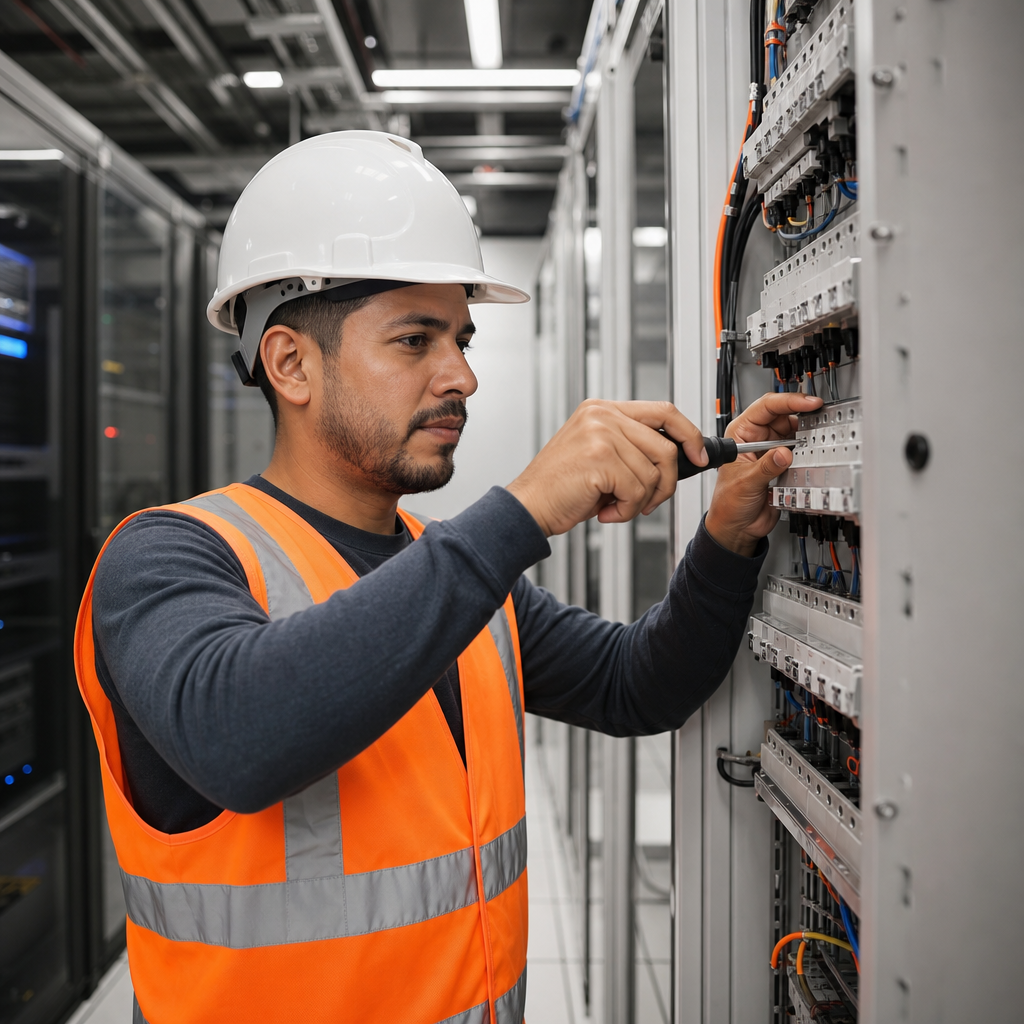
You're an electrician, HVAC tech, or plumber and you keep hearing about data center construction in your area. This tells you which IBEW locals are doing the work, what the wages actually are market by market, and how to get to the higher-paying operations side after construction.
Veteran
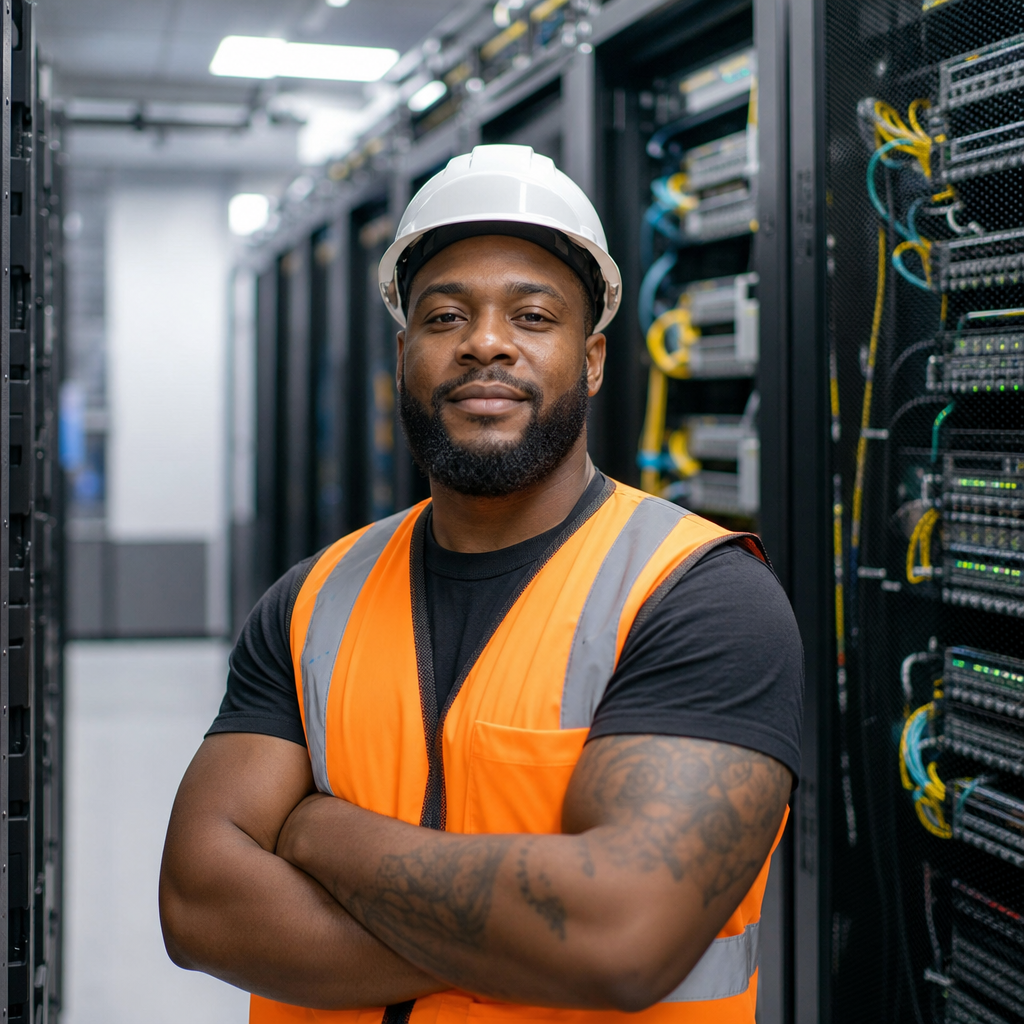
You have military experience in electrical systems, communications, HVAC, or facilities — skills that translate directly. This covers the best veteran-specific pipelines: Salute Mission Critical, Oracle/Saint Martin's University, IBEW VEEP, and how to use GI Bill or VR&E (Chapter 31) without burning months.

Career Changer
You're in logistics, manufacturing, security, or building maintenance and you want to transition. This tells you the honest timeline, what entry looks like versus what 3 years in looks like, and which free programs (Nomad Futurist Academy, Microsoft Datacenter Academy) have no prerequisites and no cost.
Heard the concerns? Here are the facts.
Data centers get a lot of headlines. If a neighbor or family member pushes back, here's the evidence — so you can make the case for the work with confidence.
“They'll strain the grid and raise my power bill.”
US data centers used about 4.4% of the nation's electricity in 2023 — even with the AI surge, projections put them at roughly 7–12% by the late 2020s, not “most of the grid.” Regulators require operators to pay up front for new substations, transmission, and generation, and a January 2026 analysis found 56 GW of planned capacity set to run on its own on-site power, off the public grid entirely.
“They waste enormous amounts of water.”
New AI facilities increasingly use air-cooled or closed-loop systems and reclaimed, non-drinking water instead of competing for municipal supply. For scale: agriculture uses 70–80% of US freshwater while data centers are a tiny fraction — and operators often fund local water-recycling plants that serve residents too.
“They're terrible for the environment.”
The hyperscalers building these campuses are among the largest buyers of renewable energy on Earth, are signing new nuclear deals, and chase 24/7 carbon-free power and record efficiency. The build-out is pulling new clean generation onto the grid that benefits everyone connected to it.
“They don't create real, lasting jobs.”
Each campus supports thousands of construction jobs during build-out and hundreds of permanent operations roles, plus a major local tax base. In Ohio, data centers already support 95,000 jobs and $7 billion in wages, on track for 132,000+ by 2030.
Figures from McKinsey, JLL, Goldman Sachs, Lawrence Berkeley National Laboratory, Pew Research, Brookings, and the Ohio Chamber of Commerce Research Foundation (2025–2026).
What you get when you subscribe
$15/month or $90/year. 7-day free trial. Cancel any time.
Full reference library
Comprehensive learning and research across 14 branches. Market profiles, wage tables, training programs, certification guides, and regulatory context — updated as the industry changes.
Weekly market updates
New construction announcements, regulatory changes, wage updates, training program deadlines. Delivered to your inbox every week.
Verified, primary-source research
Everything in this library is traceable to IBEW locals, community college program pages, state legislative records, and company announcements. Not aggregated clickbait.